The first commit landed at 20 minutes past midnight on 21 August: a customer tip page, a Stripe money path and a worker iOS app, all called Tappy. Fifty-eight hours later, nearly every screen a customer could see said TipBop instead.
We changed it because we went and checked, and the checks said Tappy was a name we would spend money defending and would probably lose.
The name we would actually own
By the evening of 21 August the product had already been corrected once, from “Tappy” to “Tappy Tips”. That looked like it solved the problem. It did not, and the reason is worth knowing if you are naming anything.
A trade mark protects the part of a name that is distinctive. “Tips” describes a tipping service, so nobody can own it for one. Strip it away and the mark we would actually hold was TAPPY on its own. And TAPPY appeared to be in use already by a payments brand in the UK, close to what we were building. Companies House listed 20 companies called Tappy.
Our decision log put it in one line: this was a name we might have had to defend. A tap-to-pay brand objecting to a tap-to-tip app is not a long shot.
Four checks, more than sixty names
So we ran a proper clearance round. Every candidate had to pass four checks, in this order, before anyone was allowed to like it.
Four checks, more than 60 names
Every candidate had to clear all four. TipBop was the one that did.
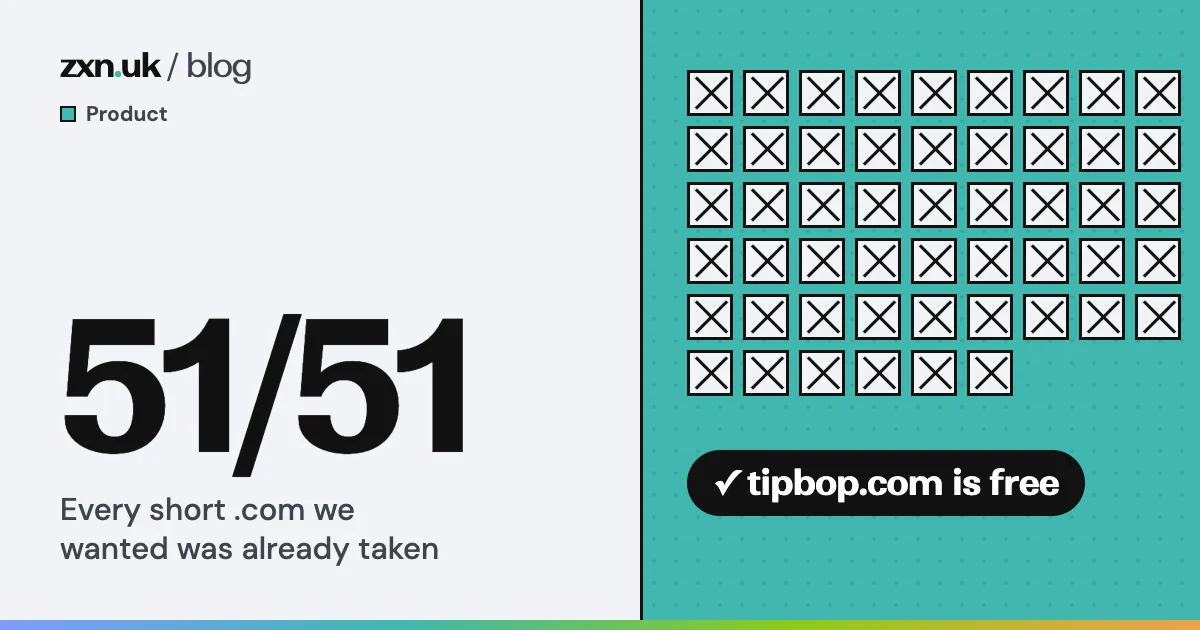
The domain check was the brutal one. Every short single-word .com we tested was registered already: 51 out of 51. That is not bad luck. That is what the namespace looks like in 2026, and it is why so many new products have names that sound slightly made up.
TipBop came through all four. tipbop.com, .co.uk, .tips, .app and .uk were all unregistered. Companies House had no matches. There was no TIPBOP mark on the registers and no app on either store using it. We also checked the campaign layer before committing: tipbopboom was free across the same endings, so a #TipBopBoom campaign could be ours too.
Earlier names had come and gone. One, GratiTapr, was written into a brief on 21 August as a candidate and got no further. TipBop was short, said what the product does, and could be owned outright. That combination turned out to be rare.
Rename the outside, leave the inside
The rename went out on the morning of 23 August, and the interesting decisions were about what not to change.
The public origin moved to tipbop.com. Everything that pointed at the old name, tappy.tips and the rest of the set, nine hosts in all, now redirects there with the path kept intact. That detail matters more than it looks. Pilot workers had printed badges and NFC cards carrying tappy.tips/t/ links, and those are physical objects in people’s pockets. They cannot be updated, so the redirect has to live as long as the cards do.
The brand pack had to be rebuilt, not relabelled. The wordmark had been outlined to paths, so swapping its accessible label would have left every SVG drawing “tappy tips” under a new name, wrong to the eye and invisible to a text search.
We also found a hole in our own safety net. A test exists to fail the build if the old product name appears anywhere a reader can see it. The customer tip page, the most-read page in the whole product, sat outside the folders it swept. So did the push and email code. After everything else had changed, an email subject, a push title and the tip page itself still said Tappy. The sweep is wider now.
Two consequences were easy to miss. Apple Pay is registered per domain and per connected account, and quiet accounts never trigger a re-registration, so each of the four pilot worker accounts had to be re-registered against the new domain by hand or it would lose the wallet button with no error anywhere. And web push subscriptions belong to an origin, so every subscription made on tappy.tips died with the move. Pilot workers had to add the app to their home screen again.
Inside, almost nothing changed. The environment variables, the database and its role, the CSRF header, the metric names, the service units and the release paths all still say tappy. Renaming a payment ledger already in use is a separate piece of work with real risk and no reader. A customer never sees a database name. A failed migration on the money path, they would see.
Then the app stores made the call for us
That line held for exactly one day. On 24 August the stores moved the boundary.
The Google Play listing had been created as com.tipbop.worker, and Android’s build tooling refuses to build when the app’s identifier does not match the package registered with Google’s services. Push notifications and verified app links were blocked until the code agreed with the store.
On iOS the bundle identifier is permanent once the first build goes to TestFlight. The pilot had been built under a temporary developer team with a throwaway identifier, by design. Mediant Partners Ltd now had its own Apple developer account, so we built the app there with the real identifier from the start, which means nothing ever has to be transferred later.
So the app-store identifiers moved to com.tipbop.worker, and in the same commit we switched on the file that tells iOS which app owns tipbop.com. We had held that file back on purpose. iOS caches it hard and it names the bundle identifier, so serving it with the wrong one would have been a mistake that outlived the fix.
The rule we ended up with is narrower than the one we started with, and better: rename what a person or a store checks, and leave alone what only our own code reads.
Update, 9 November 2026
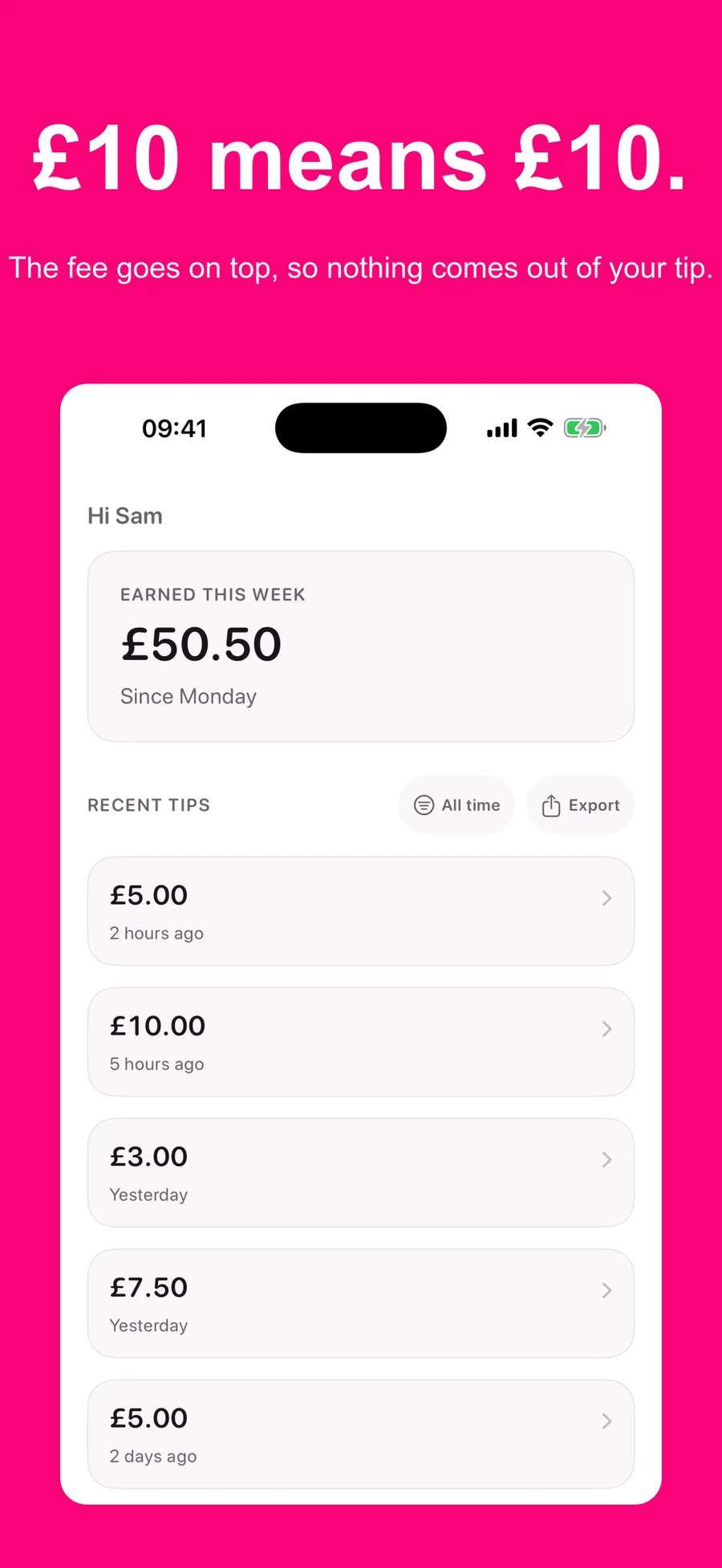
The name on the outside changed in two days. The database underneath is still called tappy. Here is an App Store screenshot from a later TipBop build, which did not exist when this post was dated.