
OUR OWN SITE · WEBSITE
Barking Blog
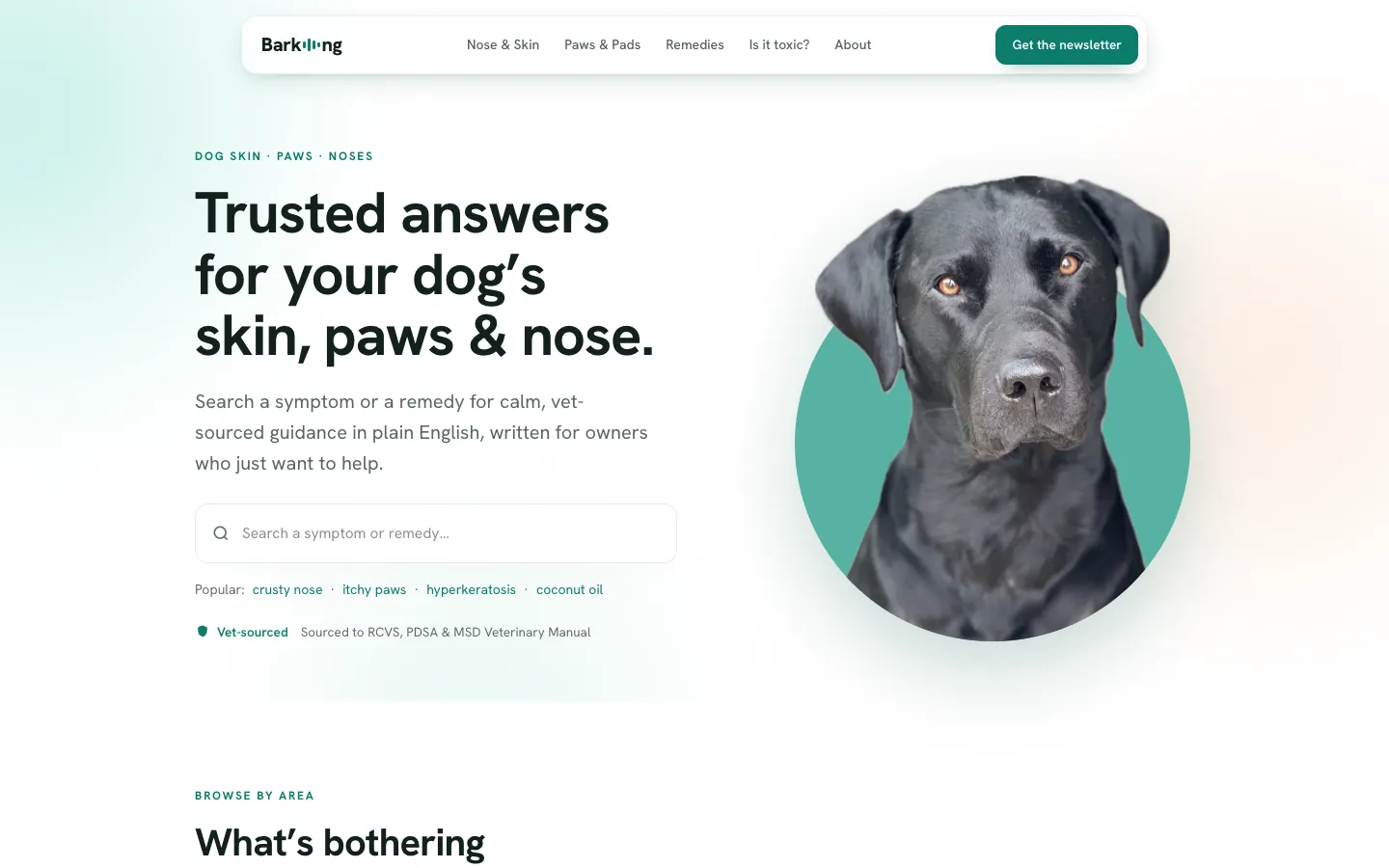
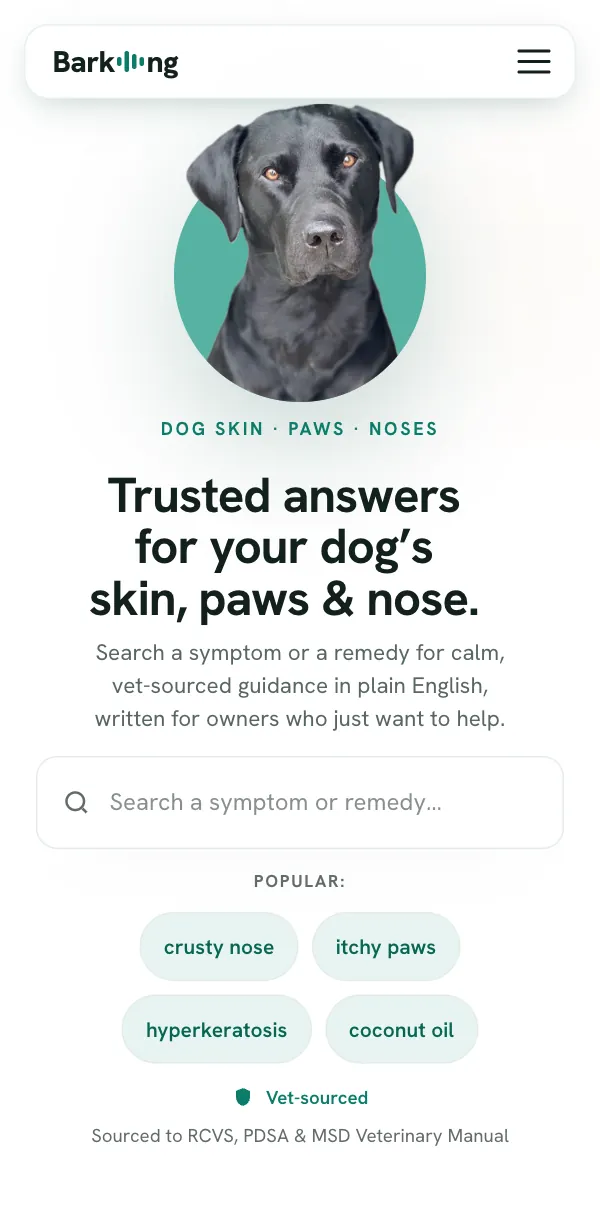
Our own dog-care blog, rebuilt so it loads quickly on any phone. It is ours, so no client was involved, and we say plainly how its guides are written and where they stop.
At a glance
- Who it’s for
- Dog owners in the UK. It is our own blog, not a client’s.
- What they do
- Plain guides on dog skin, paws and noses.
- What we did
- Rebuilt the blog so it loads fast, and added a toxin checker and a UK statistics page.
- What changed
- It scores 97 to 100 out of 100 in Google’s own speed and quality checks, tested 21 October 2026.
- Live since
- August 2026
The brief
Barking was already a blog about dog skin, paws and noses. We wanted to see what a small health-information site looks like when built the way we build client sites: quick to load and easy to read on a phone.
Because the subject is pet health, the second aim was honesty. The site should say who writes it, which sources it relies on, when to see a vet and how AI is used, rather than borrowing authority it does not have.
What the site does
Read 45 plain guides on dog skin, paws and noses
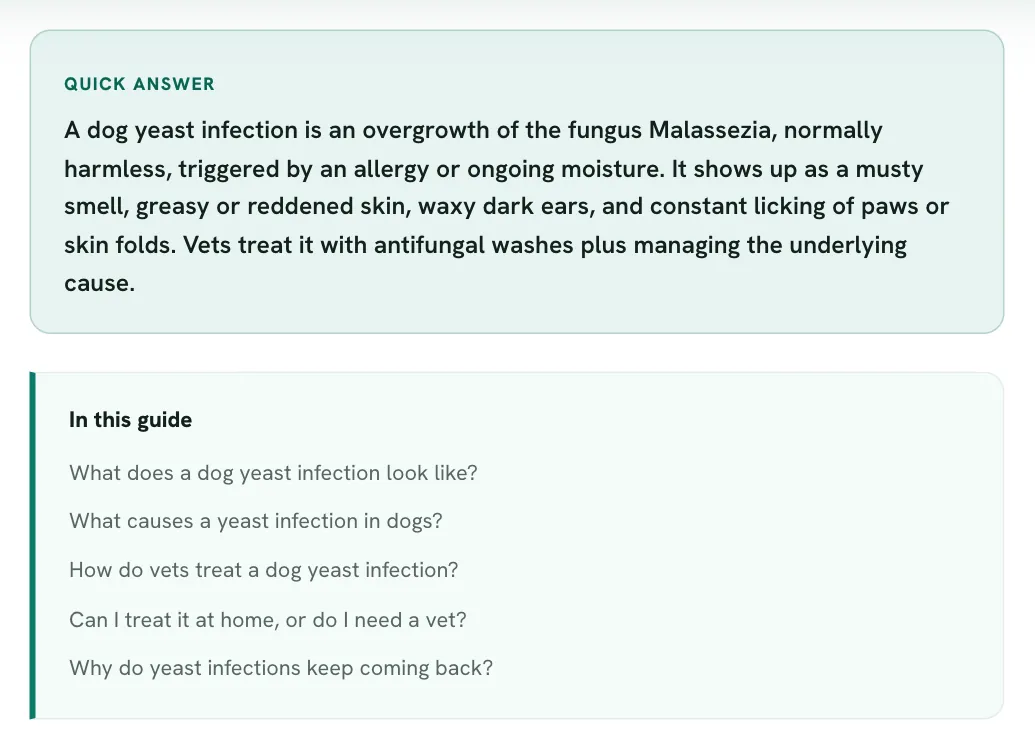
You can read 45 guides, all about dog health, with a main page for skin, paw and nose care. Each guide opens with a short quick answer and a list of the questions it covers.
Search by symptom
You can type a symptom into the home page search box and it suggests guides as you type, for owners who know the symptom but not the name.
Check whether something is poisonous to your dog
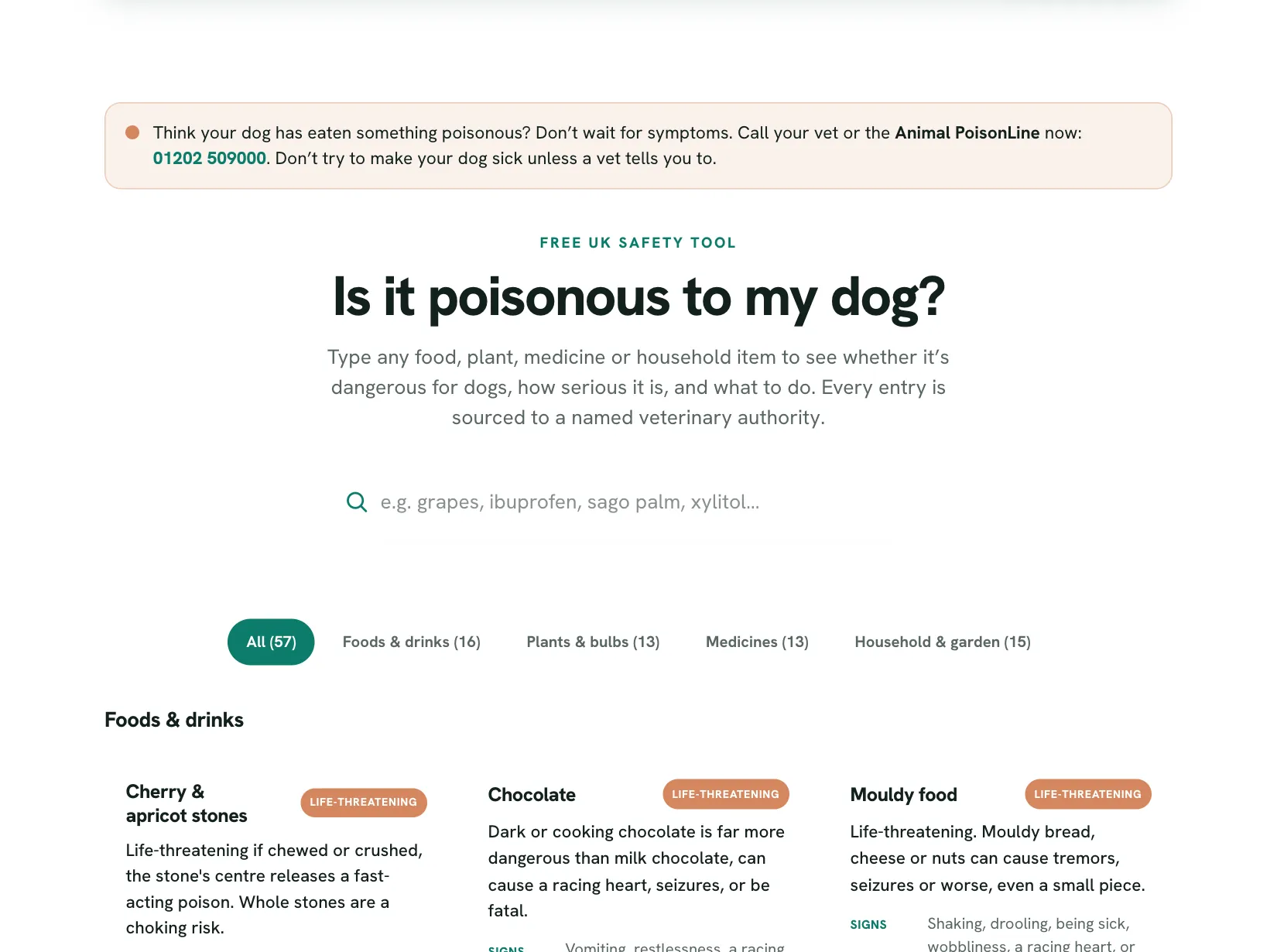
You can look up 57 foods, plants, medicines and household items. A prominent note says to call a vet or the Animal PoisonLine straight away if a dog has eaten something poisonous, and not to make the dog sick unless a vet says so.
See UK dog skin figures and where each comes from
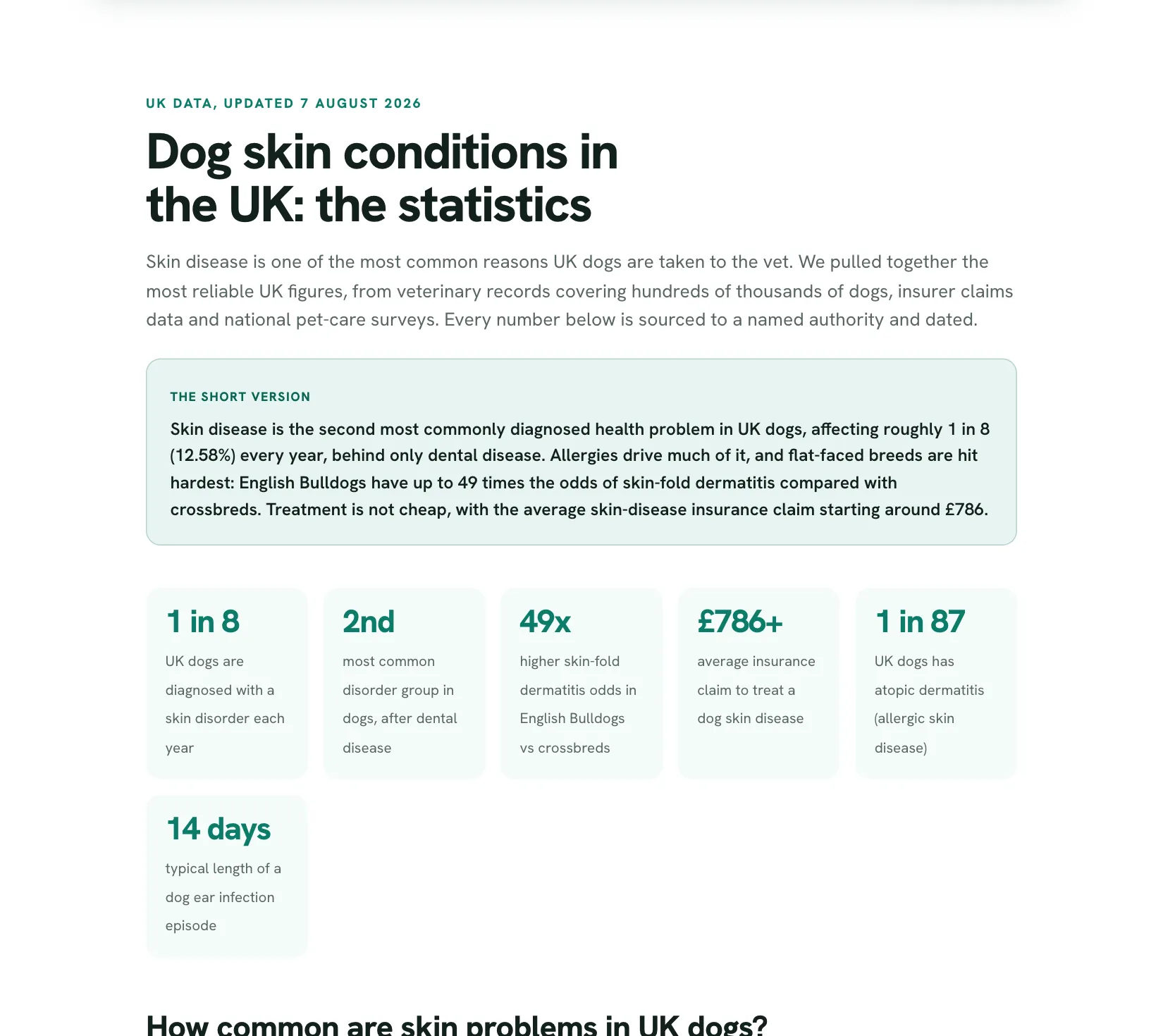
You can see UK figures on dog skin disease on one page. The page says every figure is credited to a named authority and dated, and it was last updated on 7 August 2026.
Find out who writes the guides and how AI is used
You can see who writes the guides: Ed Clarke, a lifelong UK dog owner, not a vet, and no vet reviews them. The how-we-check page lists the veterinary bodies the guides cite. It says AI tools help with research and first drafts, and that a person edits and fact-checks each guide against named sources. Five guides added in the rebuild were drafted with AI and then fact-checked by a second AI pass. The earlier guides were carried over from the old blog. The website itself was also built largely with AI coding assistants.
Also in place: Automatic checks before an update goes live, including a pet-health safety check and a link check. The photographs are stock images checked by eye, not photos of the dogs in the guides.
See what a site like this costs. The price and what’s included are written down.
Inside the site
Measured results
We tested the live site on 21 October 2026 using Google’s own speed and quality checks, with the phone test mimicking a slow connection. We have no measurements of the old site, so these figures stand alone.
- 97/100Speed on a phoneReaders on a slow phone connection are not left waiting for a guide to open.
- 99/100Easy to use for everyone, on a phone and a computerNearly every check for being usable by everyone passes, so more readers can use the guides.
- 100/100Following good practice, and how easily Google can read itGoogle can read the pages, which helps the guides show up when owners search.
- 2.6 secondsTime before the main content shows on a phoneA reader on a slow phone sees the start of a guide in under three seconds.
Facts checked on against the live website and public records. Something wrong? Email [email protected] and we will check it.
More websites
Want a website built the way we build this one? One package with the price and the scope written down.